- FREE SHIPPING ON ORDERS $500+ & Free Returns
- +1 424 225 1613
- order@eliteammodepot.com


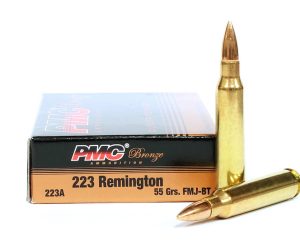
223 Remington
$189.99
223 Remington
Cartridge
223 Remington
Grain Weight
50 Grains
Quantity
200 Round
Configuration
(10 Boxes of 20)
Muzzle Velocity
3363 Feet Per Second
Muzzle Energy
1256 Foot Pounds
Bullet Style
Full Metal Jacket


Description
Description
223 Remington: The Complete Guide to America’s Most Popular Rifle Cartridge
Introduction to the 223 Remington
When you walk into any gun store across America, one cartridge dominates the shelves more than any other: the 223 Remington. This small but mighty round has captured the hearts of shooters nationwide, from weekend plinkers to serious hunters and competitive marksmen. But what makes the 223 Remington so special? Why has it become the go-to choice for millions of American shooters?
The 223 Remington isn’t just another cartridge—it’s a phenomenon that revolutionized modern shooting sports. Whether you’re new to firearms or a seasoned veteran, understanding this cartridge is essential for anyone serious about rifle shooting. Think of it as the Swiss Army knife of rifle cartridges: versatile, reliable, and surprisingly capable despite its modest size.
In this comprehensive guide, we’ll explore everything you need to know about the 223 Remington, from its fascinating military origins to its modern-day applications. We’ll dive deep into its technical specifications, compare it to its military cousin the 5.56 NATO, and help you understand why this cartridge has maintained its popularity for over half a century.
History and Development of the 223 Remington
Origins in Military Applications
The story of the 223 Remington begins in the late 1950s, during the height of the Cold War. The U.S. military was searching for a lighter, more controllable alternative to the powerful but heavy 7.62 NATO round. Enter Eugene Stoner and his revolutionary AR-15 rifle design, which needed an equally innovative cartridge to match its capabilities.
Working closely with Remington Arms, military engineers developed what would eventually become the 223 Remington. The cartridge was designed around a 55-grain bullet traveling at approximately 3,200 feet per second—a combination that offered flat trajectory, minimal recoil, and devastating terminal performance on target. This wasn’t just evolution; it was a complete paradigm shift in military thinking about small arms ammunition.
The development process wasn’t without controversy. Traditional military minds questioned whether such a small cartridge could be effective in combat. However, extensive testing proved that the high-velocity, lightweight bullet could deliver surprising stopping power while allowing soldiers to carry more ammunition with less weight burden.
Transition to Civilian Use
In 1964, Remington officially introduced the 223 Remington to the civilian market, though it had been in limited commercial production since 1962. The timing couldn’t have been better. American hunters were becoming increasingly interested in varmint hunting, and the 223’s combination of accuracy, flat trajectory, and minimal pelt damage made it ideal for this application.
The civilian adoption wasn’t immediate, but it was steady. Early adopters were primarily varmint hunters who appreciated the cartridge’s ability to deliver precise shots at extended ranges with minimal recoil. Word spread quickly through hunting camps and shooting ranges about this new wonder cartridge that could consistently hit prairie dogs at 300 yards.
As the AR-15 platform became available to civilians, the 223 Remington’s popularity exploded. The cartridge that had been designed for military use found new life in sporting applications, competitive shooting, and eventually became one of the most popular cartridges in American history.
Technical Specifications and Ballistics
Case Dimensions and Design
The 223 Remington case is a marvel of engineering efficiency. Measuring 1.76 inches in overall length with a case length of 1.76 inches, it’s designed to maximize powder capacity while maintaining reliable feeding and extraction. The case features a 23-degree shoulder angle, which provides excellent powder burn characteristics and contributes to the cartridge’s inherent accuracy.
The case head diameter measures 0.378 inches, identical to the 30-06 Springfield family of cartridges. This design choice allowed manufacturers to use existing bolt faces and actions, making the transition to the new cartridge more economical. The rim thickness of 0.045 inches provides reliable extraction while maintaining case strength.
One of the most impressive aspects of the 223 Remington case design is its efficiency. Despite holding only about 28 grains of powder, the case design allows for complete powder burn within relatively short barrel lengths. This efficiency translates to consistent velocities and excellent accuracy across a wide range of rifle platforms.
Bullet Weight Options
The 223 Remington’s versatility shines through its wide range of bullet weight options. The most common weights range from 40 grains to 77 grains, with each weight class serving different purposes and applications.
The 40-45 grain bullets are speed demons, often exceeding 3,600 feet per second from standard length barrels. These lightweight projectiles are perfect for varmint hunting, where explosive terminal performance and flat trajectory are paramount. They’re particularly effective on prairie dogs, ground squirrels, and other small varmints.
The 55-grain bullet represents the original military specification and remains one of the most popular choices. With muzzle velocities around 3,200 feet per second, these bullets offer an excellent balance of speed, accuracy, and terminal performance. They’re suitable for everything from target shooting to medium-sized varmints.
Heavier bullets in the 69-77 grain range have gained popularity in recent years, particularly among competitive shooters and those seeking maximum accuracy. While slower than their lighter counterparts, these bullets maintain velocity better at extended ranges and often deliver superior precision from fast-twist barrels.
Velocity and Energy Performance
The 223 Remington’s ballistic performance is truly impressive for such a small cartridge. From a 20-inch barrel, typical velocities range from 3,600 feet per second with 40-grain bullets down to about 2,700 feet per second with 77-grain bullets. This velocity range provides shooters with options for virtually any application.
Energy levels vary significantly with bullet weight, but even the lightest loads generate over 1,100 foot-pounds of energy at the muzzle. The 55-grain loads produce approximately 1,250 foot-pounds, while the heaviest bullets can exceed 1,300 foot-pounds. While these numbers might seem modest compared to larger cartridges, the 223’s high velocity creates devastating terminal effects on appropriate targets.
The cartridge’s flat trajectory is perhaps its most celebrated characteristic. A 55-grain bullet zeroed at 200 yards will drop only about 7 inches at 300 yards, making it exceptionally easy to shoot accurately at extended ranges. This flat trajectory, combined with minimal wind drift, makes the 223 Remington an excellent choice for precision shooting applications.
223 Remington vs 5.56 NATO: Understanding the Differences
Pressure Specifications
One of the most common sources of confusion among shooters is the relationship between 223 Remington and 5.56 NATO ammunition. While they appear nearly identical, there are important differences that every shooter should understand.
The primary difference lies in pressure specifications. The 223 Remington operates at a maximum average pressure of 55,000 PSI (measured using the piezoelectric method), while the 5.56 NATO operates at higher pressures, typically around 62,000 PSI. This pressure difference isn’t just academic—it has real-world implications for safety and performance.
The higher pressure of 5.56 NATO ammunition translates to slightly higher velocities and more aggressive extraction characteristics. While this might seem like a clear advantage, it also means that 5.56 NATO ammunition can potentially damage rifles specifically chambered for 223 Remington, particularly older or weaker actions.
Chamber Dimensions
Beyond pressure differences, the chamber dimensions between 223 Remington and 5.56 NATO also vary slightly. The 5.56 NATO chamber features a longer throat (the area where the bullet sits before engaging the rifling) and slightly different throat angles. These dimensional differences allow the 5.56 chamber to safely accommodate both 223 Remington and 5.56 NATO ammunition.
The longer throat in 5.56 chambers can affect accuracy with some 223 Remington loads, as the bullet may have to travel further before engaging the rifling. However, many shooters report excellent accuracy from 5.56 chambers with proper load selection and tuning.
Interchangeability Considerations
The general rule of thumb is simple: 223 Remington ammunition can safely be fired in 5.56 NATO chambers, but 5.56 NATO ammunition should not be fired in rifles specifically chambered for 223 Remington. This rule ensures safety while allowing maximum flexibility for shooters with 5.56 NATO chambered rifles.
Many modern rifles are actually chambered for 5.56 NATO, even when marketed for civilian use. This chambering choice provides maximum versatility and safety margin. When in doubt, check your rifle’s barrel markings or consult the manufacturer’s specifications to determine your exact chamber dimensions.
Popular Applications and Uses
Hunting Applications
Varmint Hunting
The 223 Remington has earned its reputation as the ultimate varmint cartridge. Its combination of high velocity, flat trajectory, and devastating terminal performance makes it ideal for hunting small, fast-moving targets at extended ranges. Prairie dogs, ground squirrels, coyotes, and other varmints have made the 223 Remington the go-to choice for serious varmint hunters.
The cartridge’s accuracy potential is particularly important for varmint hunting, where precise shot placement is essential. Many shooters report sub-MOA accuracy from quality rifles, making those challenging 300-yard shots on prairie dogs not just possible, but routine. The minimal recoil also allows for quick follow-up shots, important when hunting in areas with high target density.
The explosive terminal performance of lightweight, high-velocity bullets minimizes pelt damage while ensuring quick, humane kills. This characteristic has made the 223 Remington particularly popular among fur hunters and those who prefer minimal meat damage on edible game.
Small Game Hunting
While primarily known for varmint hunting, the 223 Remington has found a place in small game hunting as well. With proper bullet selection, it’s effective on rabbits, squirrels, and similar-sized game. The key is choosing bullets that provide adequate expansion without excessive destruction.
Many hunters appreciate the 223’s minimal recoil when hunting small game, particularly when introducing young shooters to the sport. The cartridge’s accuracy and flat trajectory make it easier to achieve clean, ethical kills on small targets, while the low recoil helps new hunters develop proper shooting technique without developing a flinch.
Target Shooting and Competition
The 223 Remington has become a dominant force in competitive shooting sports. From Service Rifle competitions to long-range precision matches, the cartridge’s inherent accuracy and consistency have made it a favorite among serious competitors.
The cartridge’s efficiency and relatively low cost make it ideal for high-volume training. Competitive shooters often fire thousands of rounds per year, and the 223’s moderate cost and excellent barrel life make this level of practice economically feasible. The minimal recoil also allows shooters to maintain proper form and follow-through, essential for competitive success.
Many precision shooting disciplines have embraced the 223 Remington, particularly when using heavy, high-BC bullets. The cartridge’s consistency and accuracy potential make it competitive with much larger cartridges at ranges extending well beyond 600 yards.
Home Defense Considerations
The 223 Remington’s role in home defense is somewhat controversial, but many experts consider it an excellent choice for this application. The cartridge’s high velocity and light bullets tend to fragment when striking drywall and other building materials, potentially reducing over-penetration concerns compared to handgun cartridges or shotgun slugs.
The cartridge’s minimal recoil allows for quick, accurate follow-up shots, while the rifle platform provides superior accuracy and handling compared to handguns. Modern defensive bullets designed for the 223 Remington provide excellent terminal performance while minimizing over-penetration risks.
However, the rifle platform’s length and the cartridge’s loud report in enclosed spaces are considerations that must be weighed against its advantages. Many home defense experts recommend specialized ammunition designed specifically for this application.
Bullet Types and Performance
Full Metal Jacket (FMJ)
Full Metal Jacket bullets represent the most basic and often most affordable option for 223 Remington ammunition. These bullets feature a lead core encased in a copper or steel jacket, with the lead core exposed only at the base. The design was originally intended for military use, where Geneva Convention requirements prohibited expanding bullets.
FMJ bullets excel in target shooting applications where expansion isn’t necessary or desired. They typically offer excellent accuracy and consistency, making them perfect for practice sessions and competitive shooting. The lack of expansion also means they tend to punch clean holes in paper targets, making scoring easier and more accurate.
However, FMJ bullets have significant limitations for hunting applications. Their tendency to pass through targets without expanding can result in insufficient energy transfer and poor terminal performance. This characteristic makes them unsuitable for most hunting scenarios, though they remain popular for target shooting and training.
Hollow Point Bullets
Hollow point bullets represent the evolution of bullet design for maximum terminal performance. These bullets feature a hollow cavity in the nose, which causes rapid expansion upon impact with soft tissue. The expansion creates a larger wound channel and transfers more energy to the target, resulting in superior stopping power.
Modern hollow point bullets for the 223 Remington are marvels of engineering. Manufacturers use controlled expansion designs that ensure reliable performance across a wide range of velocities and target materials. Some designs feature polymer tips that improve ballistic coefficients while ensuring consistent expansion.
The versatility of hollow point bullets makes them suitable for both hunting and defensive applications. Different designs optimize performance for specific uses, from varmint hunting bullets that provide explosive expansion to defensive bullets that balance expansion with penetration.
Soft Point Bullets
Soft point bullets offer a middle ground between FMJ and hollow point designs. These bullets feature an exposed lead tip that provides controlled expansion while maintaining structural integrity. The result is reliable expansion with good penetration characteristics.
Soft point bullets are particularly popular for hunting applications where deep penetration is important. They tend to hold together better than hollow points when encountering bone or other obstacles, making them suitable for larger game within the 223’s capability range.
The controlled expansion characteristics of soft point bullets also make them suitable for situations where over-penetration is a concern. They provide good terminal performance while typically not expanding as rapidly or dramatically as hollow point designs.
Rifle Platforms for 223 Remington
AR-15 Platform
The AR-15 platform and 223 Remington cartridge were designed together, creating a synergy that has made both incredibly popular. The AR-15’s modularity allows shooters to customize their rifles for specific applications, from precision shooting to hunting to home defense.
The platform’s semi-automatic operation takes full advantage of the 223’s minimal recoil, allowing for rapid follow-up shots. The direct impingement gas system works particularly well with the 223’s pressure curve, providing reliable cycling across a wide range of bullet weights and velocities.
Modern AR-15 rifles chambered in 223 Remington (or 5.56 NATO) offer exceptional accuracy potential. With quality barrels and ammunition, sub-MOA accuracy is readily achievable. The platform’s modularity also allows for easy barrel changes, letting shooters optimize their rifles for specific applications.
Bolt-Action Rifles
Bolt-action rifles chambered in 223 Remington offer maximum accuracy potential and reliability. Without the mechanical complexity of semi-automatic operation, bolt-action rifles can be built to extremely tight tolerances, resulting in superior accuracy.
Many manufacturers offer bolt-action rifles specifically designed for the 223 Remington, from budget-friendly options to precision instruments costing thousands of dollars. The cartridge’s moderate pressure and size make it suitable for both lightweight hunting rifles and heavy-barreled precision guns.
The bolt-action platform is particularly popular among varmint hunters and precision shooters who value accuracy above all else. The ability to single-load cartridges optimized for specific rifles can result in accuracy levels that exceed even the best semi-automatic platforms.
Semi-Automatic Options
Beyond the AR-15 platform, several other semi-automatic options are available for the 223 Remington. These include rifles like the Ruger Mini-14, various AK-pattern rifles, and modern designs from manufacturers like Sig Sauer and FN.
Each platform offers unique advantages and characteristics. The Mini-14, for example, provides a more traditional hunting rifle appearance while maintaining semi-automatic capabilities. AK-pattern rifles offer legendary reliability and durability, though typically at some cost in accuracy compared to AR-15 platforms.
The choice of platform often depends on intended use, local regulations, and personal preferences. Each design has its devoted followers and specific applications where it excels.
Advantages of the 223 Remington
The 223 Remington’s popularity isn’t accidental—it offers numerous advantages that make it an excellent choice for a wide range of applications. Perhaps most importantly, the cartridge’s minimal recoil makes it comfortable to shoot for extended periods, encouraging practice and skill development.
The flat trajectory of the 223 Remington is another significant advantage. This characteristic makes it much easier to achieve accurate shots at varying distances without complex holdover calculations. New shooters can quickly learn to shoot accurately at extended ranges, while experienced shooters can take advantage of this trait for precision applications.
Accuracy potential is exceptional with the 223 Remington. The cartridge’s consistent pressure curve and efficient case design contribute to shot-to-shot consistency that translates to excellent accuracy. Many rifles will shoot sub-MOA groups with quality ammunition, and some precision rifles can achieve accuracy levels that exceed the capabilities of much larger cartridges.
The wide availability of ammunition is another practical advantage. Nearly every gun store in America stocks 223 Remington ammunition, and the variety of available loads is staggering. From budget practice ammunition to premium hunting loads, shooters have more options than with virtually any other cartridge.
Cost effectiveness is a significant consideration for many shooters. While not the cheapest cartridge available, the 223 Remington offers excellent value for money. The combination of reasonable ammunition costs, excellent barrel life, and minimal recoil makes it economical to shoot in large quantities.
Limitations and Considerations
Despite its many advantages, the 223 Remington does have limitations that shooters must understand. The cartridge’s light bullets and moderate energy levels make it unsuitable for larger game animals. While it can be effective on deer-sized game with proper shot placement and bullet selection, many hunters prefer larger cartridges for these applications.
Wind sensitivity, while not severe, is more pronounced than with heavier bullets from larger cartridges. The lightweight bullets can be affected by crosswinds, particularly at extended ranges. This characteristic requires shooters to develop wind-reading skills and adjust their shooting technique accordingly.
The cartridge’s high velocity can lead to rapid barrel wear when using extremely hot loads or when shooting in high-volume applications. While barrel life is generally good, it’s not unlimited, and serious high-volume shooters may need to replace barrels more frequently than with some other cartridges.
Noise levels are another consideration, particularly for hunting applications. The 223 Remington generates significant muzzle blast, which can be startling to game animals and uncomfortable for shooters. This characteristic makes suppressors particularly beneficial for this cartridge.
Reloading the 223 Remington
Component Selection
Reloading the 223 Remington opens up a world of possibilities for achieving maximum accuracy and performance. The cartridge’s popularity means that reloading components are widely available and competitively priced, making it an excellent choice for handloaders.
Case selection is crucial for consistent performance. While military surplus cases are available and economical, commercial cases from manufacturers like Lapua, Norma, and Winchester offer superior consistency and longevity. The choice often depends on intended use and budget constraints.
Powder selection is critical for optimizing performance. The 223 Remington works well with a wide range of powders, from fast-burning options like H335 and TAC to slower powders like Varget and IMR 4064. Each powder has characteristics that make it suitable for specific applications and bullet weights.
Bullet selection for reloading is virtually unlimited. From economical bulk bullets for practice to premium match bullets for competition, the options are endless. The key is matching bullet weight and design to intended use and barrel twist rate.
Load Development Tips
Developing accurate loads for the 223 Remington requires attention to detail and systematic approach. Starting with published load data is essential for safety, but fine-tuning loads for specific rifles often requires experimentation within safe parameters.
Seating depth can have a dramatic effect on accuracy with the 223 Remington. Many rifles show significant accuracy improvements when bullets are seated to specific depths relative to the rifling. This process requires careful measurement and testing but can result in substantial accuracy gains.
Powder charge weight must be carefully controlled for consistent performance. Even small variations in charge weight can affect accuracy and velocity consistency. Quality powder measuring equipment and careful technique are essential for developing consistent loads.
Case preparation becomes more important as accuracy requirements increase. Consistent case trimming, neck tension, and primer seating contribute to shot-to-shot consistency that translates to improved accuracy on target.
Cost and Availability
The 223 Remington enjoys widespread availability and competitive pricing, making it one of the most accessible cartridges for American shooters. Nearly every ammunition manufacturer produces 223 Remington loads, from budget-friendly practice ammunition to premium hunting and match loads.
Bulk ammunition prices make high-volume shooting economically feasible. Many manufacturers offer bulk packages that bring per-round costs down significantly, making it practical for shooters to maintain proficiency through regular practice.
The variety of available loads is staggering. Shooters can choose from dozens of different bullet weights, styles, and manufacturers to find the perfect load for their specific application. This variety ensures that virtually any shooting need can be met with commercially available ammunition.
During periods of high demand, the 223 Remington’s popularity can work against it, as ammunition may become scarce or expensive. However, its widespread production typically means that availability returns relatively quickly compared to less popular cartridges.
Future of the 223 Remington
The 223 Remington shows no signs of declining popularity. If anything, its position as America’s most popular centerfire rifle cartridge continues to strengthen. New rifle designs continue to be chambered for the cartridge, and ammunition manufacturers continue to develop new loads and bullet designs.
Technological advances in bullet design are pushing the performance envelope of the 223 Remington. Modern bullets with improved ballistic coefficients and terminal performance are making the cartridge more capable than ever before. These advances are particularly evident in long-range shooting applications, where the 223 is now competitive at ranges that were once considered impossible.
The growing popularity of precision shooting sports continues to drive development in match-grade ammunition and components. This trend benefits all 223 Remington users, as the improved quality and consistency trickle down to more affordable ammunition options.
Environmental considerations are driving development of lead-free bullets and more environmentally friendly ammunition options. The 223 Remington’s high velocity makes it particularly suitable for these new bullet designs, ensuring its continued relevance in an increasingly environmentally conscious world.
Conclusion
The 223 Remington stands as one of the most successful cartridge designs in modern history. From its origins as a military cartridge designed for the revolutionary AR-15 rifle to its current status as America’s most popular centerfire rifle cartridge, the 223 has proven its worth across a wide range of applications.
Its combination of accuracy, flat trajectory, minimal recoil, and wide availability makes it an excellent choice for shooters of all skill levels and interests. Whether you’re a beginning shooter learning the fundamentals, a varmint hunter seeking precision at extended ranges, or a competitive shooter demanding consistency and accuracy, the 223 Remington offers performance that’s hard to match.
The cartridge’s versatility is perhaps its greatest strength. With proper bullet selection, it can serve effectively in roles ranging from precision target shooting to varmint hunting to home defense. This versatility, combined with its economical operation and wide availability, ensures that the 223 Remington will remain popular for generations to come.
As technology continues to advance and new applications emerge, the 223 Remington continues to evolve and improve. Modern bullets and powders are pushing its performance to new levels, while maintaining the characteristics that made it popular in the first place. For anyone serious about rifle shooting, understanding and appreciating the 223 Remington isn’t just helpful—it’s essential.
The 223 Remington has earned its place in American shooting culture not through marketing or hype, but through decades of proven performance in the field and on the range. It represents everything that makes a cartridge great: accuracy, reliability, versatility, and practicality. Whether you’re just starting your shooting journey or you’re a seasoned veteran, the 223 Remington deserves serious consideration as your next cartridge choice.
Brand
Brand
Remington
Buy Remington Ammo - Trusted by Hunters
Trust Remington ammo, a favorite among hunters for its reliability and performance. Browse our selection of Remington ammo and order today!
Reviews (0)
Related products
-
-
45-70 Government by Winchester 45-70 Govt, 300gr, Super-X Jacketed Hollow Point, (Per 20) [Winchester Ammo]
Original price was: $30.99.$27.99Current price is: $27.99.
-
Federal American Eagle Value Pack .45 ACP 230gr 100-Rounds
Original price was: $99.99.$70.99Current price is: $70.99.


![45-70 Government by Winchester 45-70 Govt, 300gr, Super-X Jacketed Hollow Point, (Per 20) [Winchester Ammo]](https://eliteammodepot.com/wp-content/uploads/2021/02/wnx4570h_1-300x250.webp)




Reviews
There are no reviews yet.